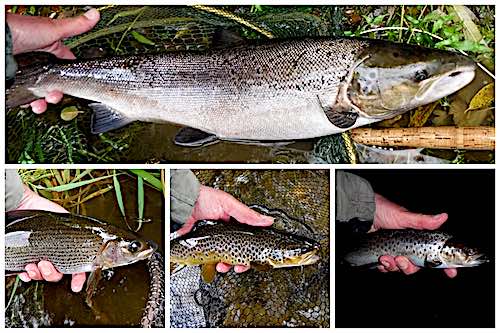
The Welsh Dee offers high-quality grayling and brown trout fishing and opportunities to catch sea trout and salmon along its 70-mile journey from its source in the Snowdonia mountains.
However, fishing the Welsh Dee during the summer months can be challenging for visiting anglers and those starting their fly fishing journey. So, I’ve put together a list of fly fishing tips to help fly fishers have a successful day on the Welsh Dee and take away some great memories.
Welsh Dee summer fly fishing tips:
Understanding the nature of a river is often key to a successful day’s fishing, and in that respect, the Welsh Dee is no different to any other river.
So, what do I mean by that?
Well, in simple terms, it’s the river ecology (insect life) and how the fish behave in changing river and weather conditions.
In the summer months, the natural flow of the Dee is supplemented with compensation water from Llyn Bala, Llyn Celyn, Llyn Brenig, and Alwen reservoir to support abstraction at Chester and safeguard migratory fish.
The release of compensation water affects the fishing in several ways, but when taken into consideration, you can have a great day on the river.
So, let’s look at how.
Summer fly fishing tips for grayling:
Unlike many UK rivers, grayling fishing on the Welsh Dee kicks into gear during the summer, mainly because gin-clear compensation water keeps the water temperature cool.
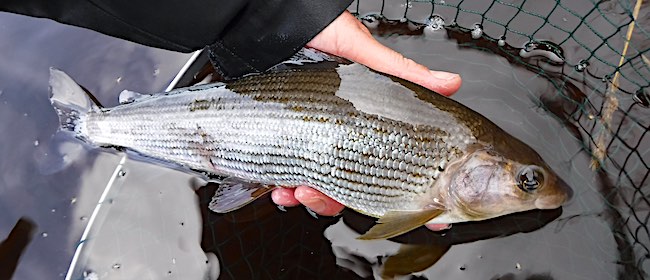
Eager to put on weight after spawning, most fly fishing techniques (dry flies, wet flies and nymphs) will catch grayling. However, a sudden increase in compensation water harms surface fly life until the aquatic insects become accustomed to the new norm in water temperature.
During this period, grayling will be feeding on the riverbed and are reluctant to look up; hence, presenting nymphs close to the riverbed is the best approach for catching graylings.
My favourite approach is to fish a two or three-fly euro-nymphing rig, where the point fly is heavy enough to drag the small dropper flies (# 16 and less) towards the riverbed.
In sunny conditions, it’s best to focus on fishing the fast water at the head of the pool and any shady areas.
I would say the fly choice is less important than reaching the riverbed in the faster riffle sections. Nymphs that work well in low, clear water on the Welsh Dee include the following.
Summer point nymphs:
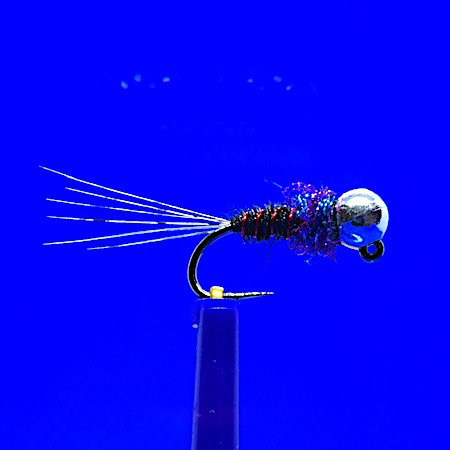
Black & Purple Pheasant Tail Nymph
- Hook: #12 to 10 Hends BL124
- Bead: 3 to 4mm silver tungsten
- Thread: 8/0 black
- Tail: Coq De Lean fibres
- Body: Black Pheasant tail
- Rib: Medium red wire
- Collar: Purple Glister dubbing
Useful variations of the black pheasant tail nymph include those with different collar colours (orange & red) and bead colours (neutral, gold, copper).
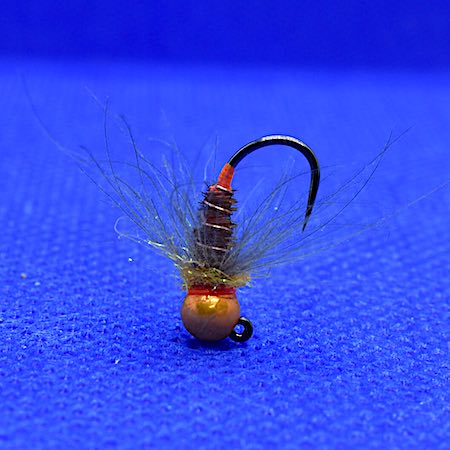
Orange Pheasant Tail Nymph
- Hook: #12 to 10 Hends BL124
- Bead: 3 to 4mm orange tungsten
- Thread: 8/0 fluorescent orange
- Tag: fluorescent orange thread
- Body: Pheasant tail
- Rib: Medium gold wire
- Hackle: Cul De Carnard
- Collar: Orange Glister dubbing
Useful variations of the orange pheasant tail nymph include those with different collar colours (peacock & red) and bead colours (neutral, gold, copper, silver)
Small dropper nymphs for summer:
Generally, during the summer months, you can’t go far wrong tying on a small (#18 to 16) hare’s ear nymph on the dropper, tied with either a copper, neutral, gold or silver bead.
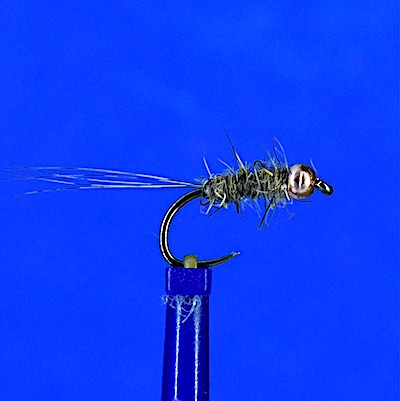
Hares Ear Nymph
- Hook: #18 to 16 Hends BL345
- Bead: 1.5 to 2mm copper tungsten
- Thread: 8/0 burnt orange
- Tail: Coq De Lean fibres
- Body: Hares Ear dubbing
- Rib: fine gold wire
In early summer, if the Hares Ear nymph fails to work, then I often try either a yellow or natural peacock quill nymph on the dropper
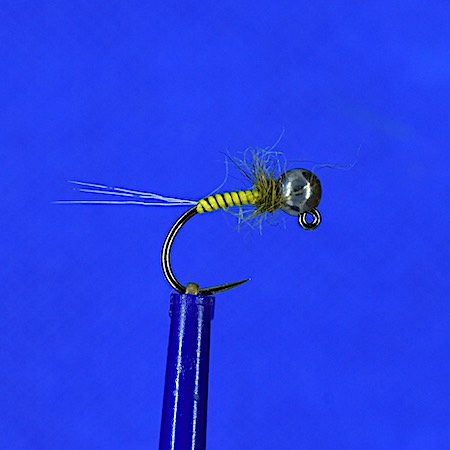
Yellow Peacock Quill Nymph
- Hook: #18 to 16 Hends BL124
- Bead: 1.5 to 2.5mm neutral tungsten
- Thread: 8/0 olive
- Tail: Coq De Lean fibres
- Body: Yellow peacock quill
- Thorax: olive hare’s ear
The other nymph that often works during the summer months is a simple black one…
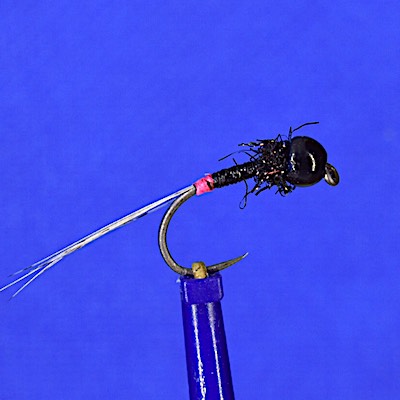
Pink Tagged Black Nymph
- Hook: #18 to 16 Hends BL345
- Bead: 1.5 to 2.5mm black tungsten
- Thread: 8/0 black
- Tail: Coq De Lean fibres
- Tag: pink thread
- Body: black thread
- Thorax: black crystal dubbing
Usually, fly hatches resume when the water temperature stabilises or warms, and grayling return to eagerly taking the dry fly, especially on overcast days. Trying to match the hatch in size & colour is the best approach to selecting a suitable dry fly to fish.
Failing that, one of the following dry flies usually works in sizes from 14 to 20.
On summer evenings, graylings often take up a position in the pool tail to take advantage of a spinner fall. Therefore, a switch to fishing a suitable spinner fly pattern often catches fish. I find that either a pheasant tail spinner or a sherry spinner works most of the time.
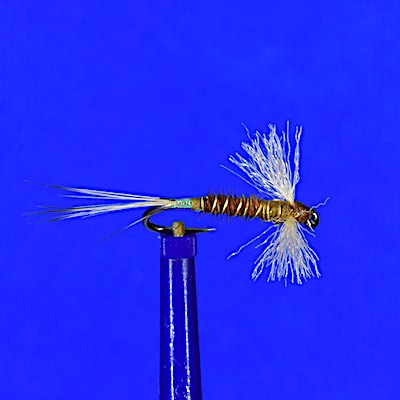
Pheasant Tail Spinner
- Hook: #16 to 14 Hends BL345
- Thread: 8/0 olive
- Tail: ginger cock
- Tag: pearl mylar
- Rib: fine gold wire
- Body: pheasant tail
- Thorax: olive dubbing
- Wing: Cream Antro Yarn
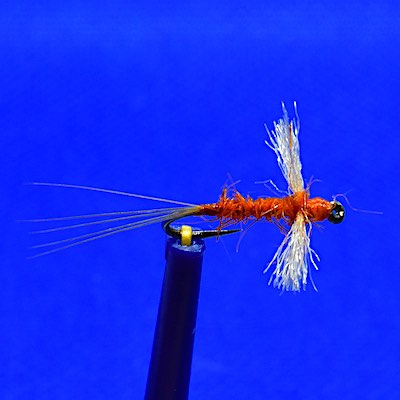
Sherry Spinner
- Hook: #16 to 14 Hends BL345
- Thread: 8/0 orange
- Tail: brown cock
- Body: burnt orange dubbing
- Wing: Cream Antro Yarn
When the river is coloured after a summer spate, short-line nymphing with nymphs sporting a dash of colour is often the best approach.
Trout fly fishing tips for summer:
In the Welsh Dee, the ratio of grayling/trout is at least 10/1. That doesn’t mean there aren’t many brown trout, just a lot more grayling. As such, anglers often comment that it’s difficult to catch trout on the Welsh Dee.
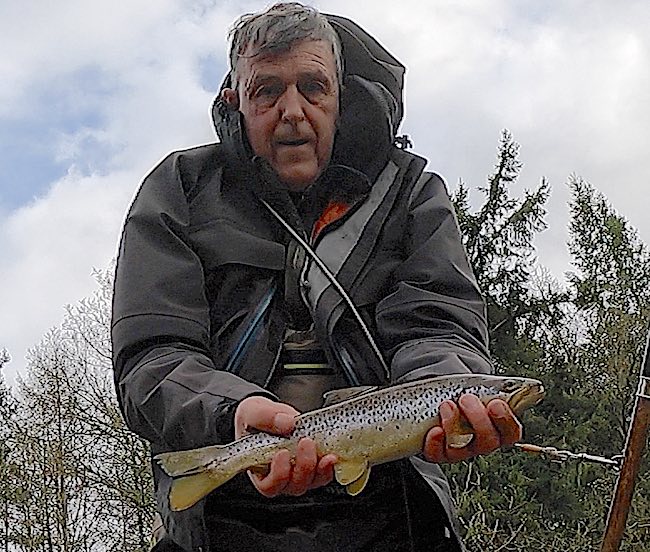
The trick to catching trout is focusing on fishing where they are likely to lie, and grayling are not. Grayling prefers pools where the riverbed consists of gravel, so avoid these areas unless you spot trout.
As a general rule of thumb, if I’m focusing on trout, I spend more time locating rising trout or likely lies, which are often in front or behind obstacles (e.g. boulders, snags, weed beds)…
i.e. fishing pools with a rough boulder-strewn riverbed.
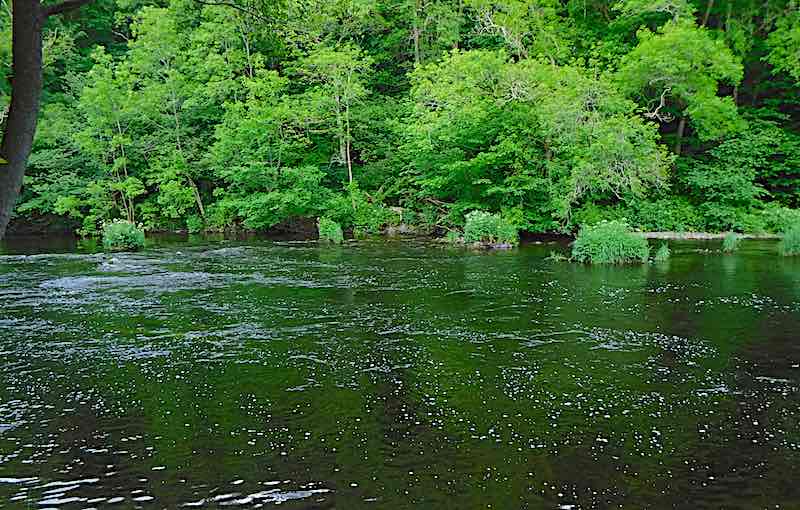
Also, unless I spot trout, I avoid fishing pools with a gravel bottom because these are more than likely to hold a shoal of grayling.
On sunny days, the best trout fishing is before 10 am and after 7 pm when the river is clear and close to its summer level.
Apart from spending time locating suitable trout lies, my approach to trout fishing in terms of method and flies is identical to that for grayling fishing on the Welsh Dee.
For further information on the trout and grayling flies I use during the summer months, check out the following articles…
- 10 Trout and grayling flies for June
- 8 Flies for July on the amazing Welsh Dee
- My 9 best trout and grayling flies for August
Sea trout summer fly fishing tips
The Welsh Dee has a sizable run of sea trout, which usually migrate into the river during June, with the run peaking between late July and early August, depending on the weather conditions.
On dull overcast days, it’s possible to catch sea trout before dark on traditional trout flies (wet and dry). Most success comes from fishing deep channels or casting under overhanging trees.
Also, try Euro nymphing the deeper water sections can prove rewarding…
For more information on daytime sea trout fishing, which includes the flies I find successful, check out the following post..
If your focus is sea trout, they’re best targeted at night when the river is close to its summer level and running clear. Nighttime sea trout fishing is best done between June and September on the Welsh Dee.
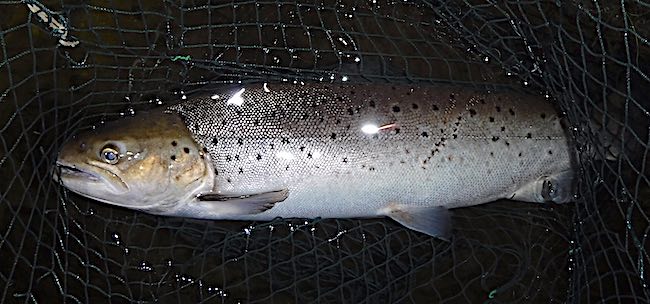
For further fly fishing tips on sea trout fishing at night and the flies I use, check out the following articles…
Salmon fly fishing tips for summer
Over recent years, there has been a steep decline in the number of Welsh Dee salmon and almost a complete collapse of the grilse run, with the bulk of the salmon entering the Welsh Dee from late May to August.
That said, if you put the hours in, it is possible to catch them during the summer, especially if you focus your fishing efforts on the lower beats of the river around Bangor-On-Dee.
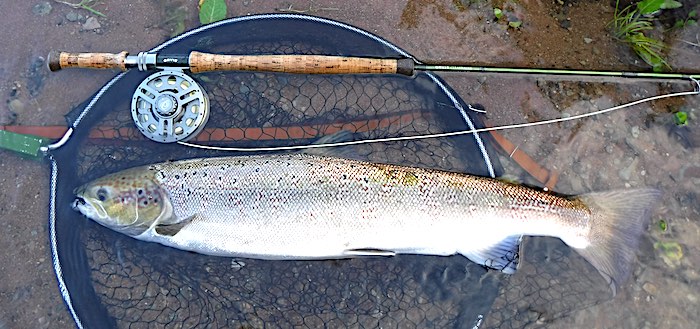
Most of my Welsh Dee salmon fishing is done in Autumn (September and October), when the sea trout fishing is drawing to a close.
Where to fish the Welsh Dee?
Fishing on a large proportion of the Welsh Dee is controlled by local fishing clubs, many of which offer reasonably priced annual membership. In addition, about 18 miles of that can be fished on a day ticket, which is ideal for visiting anglers. For example:
- Llangollen-Maelor Angling controls 10 miles of the Welsh Dee, which can be fished on a day ticket.
- Bala and District Angling Association have four beats on the Upper Welsh Dee fishable on a day ticket.
- There is also a 2-mile day ticket beat at Bangor-on-Dee.
Finally, I hope you found these summer fly fishing tips useful and that they help you catch more fish during the summer months.
Tight lines, Andrew
Always a pleasure to read your articles and view the videos. I have not been able to get over to the Dee at all this year as my competitions have been on the Ayr in Scotland so far. Thank you for putting in so much time and effort to help others Andrew. Tight Lines, Iain.