Hawker-Overend Fishing

Fly Fishing Techniques: Dry, Wet, Spider, Nymph and Streamer

Master the techniques, improve your presentation and catch more trout and grayling.

Overview

If you fish rivers in the UK, there are five fly fishing techniques that will catch you fish in almost any conditions: dry fly, wet fly, spiders, nymphing and streamers. Each one suits a different river condition, water type, and feeding behaviour. The fly anglers who catch consistently are the ones who can switch between methods.

I fish all five, mainly for brown trout and grayling, and a lot of the fishing happens on the Welsh Dee and other North West freestone rivers. This page is the starting point. Read the short summary of each technique below, then jump into the full guide for the one you want to learn.

Which Fly Fishing Technique Should You Use?

Each method has its place, and the right approach often depends on the season, river conditions and the species you're targeting.

A simple rule I follow is to look first, then choose. If fish are rising, start on the surface with dry flies. If nothing is moving, fish subsurface. If the river has colour in it, think nymphs and streamers. The following table summarises each method.
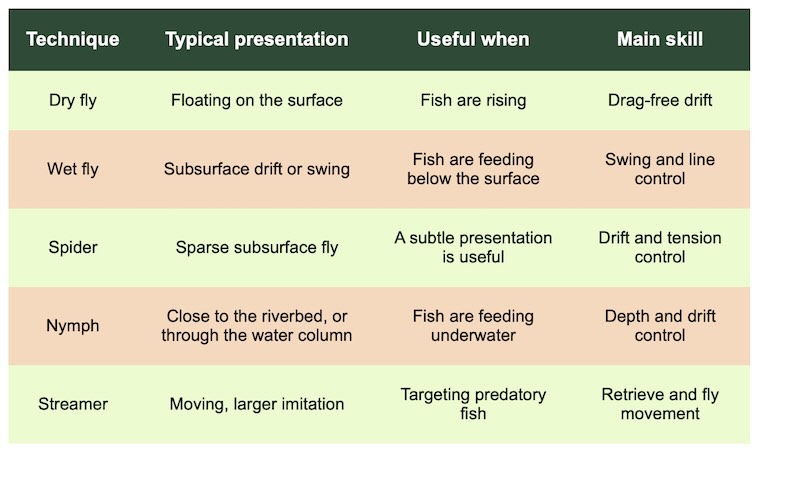
Fly fishing techniques summary

NB. The advice in this table is a general starting point, not strict rules. Conditions, target species, local regulations and fish behaviour all influence choice.

Below is an overview of each technique, with links to an in-depth guide for each.

Dry Fly Fishing

Brown trout caught using a black gnat fly

Dry fly fishing is the technique most people picture when they think of fly fishing, and it’s hard to beat for excitement. You cast a floating fly to a rising fish, watch it drift over the lie, and see the take happen on the surface. My best trout on a dry this year came on the River Wenning in May.

What makes it work?

  • A drag-free drift. If the fly skates across the current unnaturally, fish will usually refuse it.
  • Reading the rise forms to work out what the fish are eating and if they are taking the emerger or the dun on the surface.
  • Presenting the fly with a long, fine leader so it lands softly.
  • Matching the size and silhouette of the natural insects as closely as you can.

When to use it?

Spring to autumn hatches, evening rises, and any time you can see fish feeding at the surface. Grayling are brilliant dry fly fish, and they will often rise well into autumn.

Typical flies:

Klinkhammers, Parachute Adams, Elk Hair Caddis, Griffiths Gnat, and a range of olive and caddis imitations.

Read the full guide…

Dry Fly Fishing Guide

Wet Fly Fishing

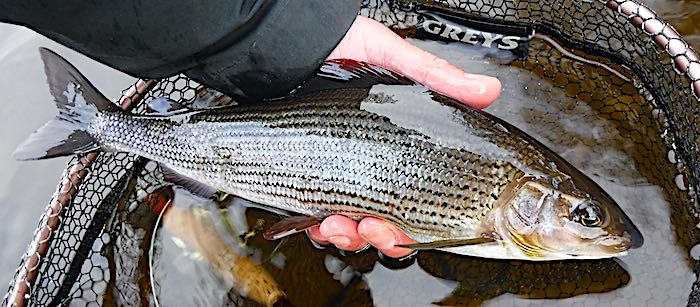
Grayling caught on a wet fly

Wet fly fishing is one of the oldest ways to catch trout, grayling and sea trout, and it is still very effective. I normally fish one or more traditional flies just below the surface, usually across and down the current and let the flow do the work. To avoid tangles on windy days I will just fish a single wet fly.

What makes it work?

  • A simple cast across the river, then a controlled swing as the line comes round on the current.
  • Keeping in touch with the flies so you will feel the take rather than just seeing it.
  • Fishing a team of two or three flies to cover different depths.
  • Covering the water methodically. Taking a step or two downstream between each cast.

When to use it?

When fish are feeding just under the surface, during a hatch with few visible rises, or when you want to search a long stretch of river efficiently. It is also a very relaxed way to fish, which makes it a great starting point for beginners.

Typical flies:

Black Hopper, winged olives, and Iron Blue wets.

Read the full guide…

Wet Fly Fishing Guide

Spider Fly Fishing

Spider fly fishing for grayling on the Welsh Dee

North Country spiders are sparsely dressed soft hackle flies that have been catching trout and grayling for centuries. A slim body and a soft, mobile hackle give them a lifelike, pulsing movement in the current, imitating hatching nymphs and drowned insects. Fishing a team of spiders was the first method I learnt and is still my preferred method.

Spiders are really a branch of wet fly fishing, but they deserve their own space because the patterns, the tying and the way you fish them have their own character. They are always in my fly box.

What makes it work?

  • Sparse dressings that let the hackle move in the current.
  • Fishing them upstream or across in a natural, drag-free manner, often on a short dropper system.
  • Fishing them where fish are taking emerging insects just beneath the surface.

When to use it?

On pale, tricky days when fish are picking off emerging flies and nothing is rising to a dry.

Typical flies: 

March Brown Spider, Snipe and Purple, Waterhen Bloa and Greenwell’s Spider.

Read the full guide…

Spider Fishing Guide

Nymph Fishing

brown trout fishing in Derbyshire - 4

Most of what a trout or grayling eats is below the surface, which is why nymphing is such a consistent way to catch fish. On the rivers I fish, I use two approaches.

Tight-line (Czech) nymphing is a close-range technique where you cast very little line, keep the leader off the water and stay in direct contact with weighted flies as they tick along the bottom. It is superb for grayling, particularly in colder months when the fish sit tight to the riverbed.

Indicator nymphing uses a strike indicator, or a dry fly acting as an indicator, to show you the take. It lets you fish nymphs at longer range and in deeper or faster water than tight-lining usually allows. The adjustable dry dropper set-up is a particularly flexible version of it, because you can change the depth quickly as you move between runs and pools.

When to use nymphing?

Any time fish are not rising, and especially in cold, low or clear water.

Typical flies: 

Pheasant Tail nymphs, Hare’s Ear variants, Perdigons and bright jig-style grayling bugs.

Read the full guide…

Tight-Line Nymphing Guide

Streamer Fishing

Brown trout caught in August - fly fishing with streamers

Streamers imitate small fish, leeches and larger food items, and they trigger aggressive, instinctive takes. They are a different style of fishing to the delicate approach of dry fly and nymphing, and they are often the best way to tempt a bigger trout.

What makes it work?

  • Fishing across and down, or across and slightly up, to give the fly movement and life.
  • Varying the retrieve with strips, pauses and twitches until you find what the fish want.
  • Using sink-tip lines, weighted flies or heavier leaders to get the fly down to the fish.
  • Fishing close to structure such as undercut banks, fallen trees, boulders and the tails of pools.

When to use it?

Coloured water after rain, low light at dawn and dusk, overcast days, and any time you want to target larger trout.

Typical flies:

Woolly Buggers, Zonkers, sculpin patterns and small baitfish imitations.

Read the full guide…

Streamer Fishing Guide

More Fly Fishing Techniques

Beyond the five core techniques for trout and grayling, I have guides for other species and situations:


Looking for flies to go with these techniques? Have a look at my guide to flies for river fishing, or read more about grayling fly fishing and fishing the Welsh Dee.

How I Build a Simple Plan for the Day

1.

Arrive and watch.

Spend five minutes looking at the water for rises, hatching insects and the colour of the river.

2.

Start with the obvious.

Rising fish means a dry fly. No rises and clear water means spiders or nymphs. Try nymphs when the water is coloured.

3.

Search the water.

To cover long runs and glides quickly I usually fish a team of spiders / wets in summer.

4.

Go deeper if needed.

If I'm not getting takes, I switch to tight-line nymphing and target lower in the water column.

5.

Change the game.

If the river is high and coloured or the light is low, and the other methods fail, I'll try a streamer.

Fly Fishing Techniques FAQ

What is the best fly fishing technique for beginners?

Wet fly fishing is the easiest place to start. You cast across the river, let the flies swing round on the current, and feel the take through the line. It is forgiving, needs very little casting skill, and catches trout, grayling and sea trout. Dry fly fishing is a close second once you are comfortable casting. Wet fly guide

Which technique is best for grayling, and which for brown trout?

For grayling, nymphing is the most consistent, especially in cold water when they hold tight to the riverbed, but they also rise well to dry flies and take spiders. For brown trout, dry flies work best during a hatch, and streamers come into their own in coloured water or low light. Grayling guide

What is the difference between wet fly fishing and fishing spiders?

Spiders are a type of wet fly. North Country spiders are sparsely dressed with a slim body and a soft hackle that pulses in the current, imitating hatching nymphs and drowned insects. Wet fly is the broader term, covering a wider range of patterns fished on or just below the surface. Spider fly guide

What is tight-line nymphing, and do I need a special rod?

Tight-line nymphing means fishing weighted flies close to the bottom with a short line and a leader held off the water, so you stay in direct contact with the flies. Longer, lighter rods of around 10 to 11 feet in a #2 or #3 weight make it easier, but you can learn the basics with a standard river rod. Tight-line nymphing guide

When should I switch to a streamer?

Try a streamer when the river is coloured after rain, when the light is low at dawn, dusk or on overcast days, or when nothing is rising and you want to target larger trout. Fish it across and down with a varied retrieve, and cover water until you find a fish that wants it. Streamer guide

Can I fish all five techniques with one rod?

A 9 to 10 foot rod in a #3 or #4 weight will handle dry fly, wet fly, spiders, light nymphing and small streamers on most UK rivers. Heavier streamers and dedicated tight-line nymphing are easier with a specialist rod, but you do not need one to get started. Flies for river fishing

Subscribe to my blog

Make your life easier - my blog posts delivered directly to your inbox.

I promise you it's only me using your email adress for just fishing blog upadates.